Wednesday, January 26, 2011

Ethiopian Muslims Warn Christians to Convert, Leave City or Face Death

Photo: Somali Muslim Militia


International Christian Concern (ICC) has learned that Christians in the Ethiopian city of Besheno are being harassed and physically abused after Muslims posted notices on the doors of Christian homes warning them to convert, leave the city or face death.

Three Christian leaders were forced to flee the city and two Christians have been forced to convert to Islam (editor's note, would you deny Jesus and convert to Islam if presented with this choice?). In the Muslim majority city, the entire evangelical Christian community consists of about 30 believers.

Evangelist Kassa Awano remains in critical condition after Muslims attacked him on November 29, 2010. A few days after the attack, nearly 100 Muslims surrounded a vehicle carrying Christian leaders on their way to negotiate for peace with Muslim leaders. Two men, Tesema Hirego and Niggusie Denano, were seriously wounded, and the other leaders suffered minor injuries. On January 2, Muslims assaulted Temesgen Peteros with a knife after he testified about the attacks on these Christians in court.

Christians in Besheno have been targeted by Muslims for many years. On May 21, 2004, Muslims murdered the 7 year-old daughter of Evangelist Tesfaye Hobe. Muslims continuously attack Christians for listening to Christian songs and watching Christian videos.

“We ask for our constitutional right [to freedom of religion] to be respected. We want this inhumane act to stop. We are unable to live in our own city due to the inhumane acts,” one of the Christian leaders who fled the city told ICC.

The local Muslim officials of the city refuse to protect the Christians. The officials ignore their appeals for justice, declining repeated requests for the building of a place of worship and a cemetery. On January 19, a Christian mother was forced to bury her deceased daughter in a town more than 20 miles from Besheno, due to the absence of a cemetery for Christians.

Besheno is a city located in the province of Alaba in Southern Ethiopia. According to the 2007 national census, 93.84% of the population of the province is Muslim. Christians make up 5.82 % of the population.

“We are alarmed by the posting of threats on Christian homes and the attacks against Christians in Besheno. We urge Ethiopian officials to bring the perpetrators of the attacks to justice, protect the Christians from further attacks and grant them permits to build a place of worship as well as a cemetery,” said Jonathan Racho, ICC’s Regional Manager for Africa.

-- -- -- -- --


PRESENT YOUR OWN COVERAGE TO THE INTERCESSORS. . .

By producing a small written item to present the leadership of your nation, picture the current situation as to persecution and/or missions, add information on spiritual combat and front lines of confrontation, report on the situation of the poor and needy in your society we will be able to come alongside in prayer.
By writing on these subjects or by sending articles written by others you will draw the attention of many intercessors, who are eager engage in the most rewarding pursuits available to man – PRAYER.
Please, do not hesitate to try to describe urgent prayer targets. . .
Blessings on every effort in this realm. . .

Lars W.

-- -- -- -- --


There I will meet with you
Ex 29:42-43

A gathering of the interceding Church for the purpose of unreserved commitment and explicit agreement. . .


01.

God’s history of deliverances, of salvation, allows us to get a glimpse of, and to begin to understand the interaction between the purposes of God, the promises of God and the painful predicaments of a people meant for glory.

Deliverance has come when the word of God has been made void, Ps 119:126.
Deliverance has come when the people of God have chosen to build for themselves, Haggai 1.
Deliverance has come when the purposes of God have been set aside.

Deliverance has come when men and women have decided to seek the Lord with focused intent and with patience and determination.
Deliverance has come when men have gathered together before the Lord according to
1 Tim 2:8, in purposeful union, in deliberate harmony, in matter-of-factness.
Deliverance will come to Zion when men and women gather for the sake of extraordinary prayer.

God delivers a people for his purposes, God saves unto his intentions. God builds His Church. He gathers a people for His praise. He delivers through Christ and unto Christ – to reveal Christ. He builds yet another temple, yet another tabernacle, even a body.

His purpose for this hour – as for all times – is a Consensus Church, the body of Christ. In it he intends to bring forth agreements of an extraordinary kind which, in turn, will bring forth extraordinary prayer. He declares that in such a setting “I will meet with you”. And this concise object aims at bringing back the Deliverer, Jesus Christ, as King and sovereign ruler.

Lars Widerberg


Objective:
A calling forth, a bringing together of godly men and women everywhere, for the sake of unreserved commitment and explicit agreement in prayer and intercession, in preparation for a solid testimony of the Lord. 1 Tim 2:8, Matt 18:19-20.

What is your role in relation to such a call? What is your response to such a call? Would you give yourself to prayer for the mobilization of such a fellowship, given to the working out of explicit agreements concerning time spent, goals defined and devotion refined?


An explicit agreement aiming at:
A recovering of the apostolic patterns for church fellowship and spiritual growth.
A recovering of the glory of God among his people.
A recovering of veracity, authenticity, holiness and godliness.
A renewal of the understanding of the sovereign Lordship of Jesus Christ among his people.
A renewed waiting before the Lord for an outpouring of the Holy Spirit.
A new period of intensified efforts in the realm of missions - a sending of workers to the harvest.

The intercessors at the Network HQ are waiting to serve you in explicit and ongoing agreement in prayer to help and cover you as you move along these paths of recovery. We have at our disposal a couple of seed fellowships who have chosen to begin to develop apostolic patterns of church life for the sake of waiting on the Lord.
The Network as such is made aware of this mobilization and is in itself the first target for this prayer effort as well as the first unit to be involved in the prayer for the sake of unreserved commitment and explicit agreement in prayer and intercession, in preparation for a solid testimony of the Lord.
The Lord mobilizes Heaven and its resources for our growing together in effectual prayer for the fulfillment of the recovery.


Reports.
We welcome reports and descriptions regarding in what manner you are able to express this agreement:
How often do you find it appropriate to gather?
Where have you found a place to gather?
Areas of prayer which you try to cover and penetrate.
How you are received by the general Christian community.
Present difficulties.
Ideas as to the development of the agreement.

Monday, January 24, 2011

The Mutual Blasphemy of Christianity and Islam.


Elizabeth Tenety of the "Washington Post" newspaper posted a piece on Muslim-Christian relations in her “On Faith” column still online. She posed the following question;

"2011 began with some bleak news for Muslim-Christian relations around the world.

Recent attacks against churches in Iraq, Nigeria and Egypt have killed dozens of Christian worshippers (sic). Meanwhile, the Pakistani government is standing by the country's controversial blasphemy law which critics say threatens religious minorities.

How should political and religious leaders deal with these challenges to interfaith relations?"

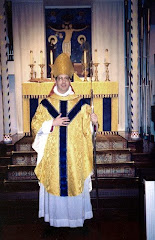
The following response by Dr. Willis E. Elliott, pictured above, the 93 year old retired dean of exploratory programs, New York Theological Seminary, NYC, was deleted by the editor of that "Washington Post" blog site. A United Church of Christ and American Baptist minister, Elliott has been a pastor, teacher, lecturer, dean, and church executive. He is the author of six books.


“Mutual blasphemers, love one another!” is the title of an essay I published many years ago. Now as then, the human project is to learn not only to live with, but to love, “the blasphemers” (meaning whichever of the two religions is not yours).

1. But the project, so defined, is not neutral. It is Christian and humanist. Christian: Jesus said, “Love your enemies.” Islam, to the contrary, is essentially hostile to “the infidels.” Humanist: Calling evil good is bad news, but the worst news is violence done in the name of God (spelled out, for example, in Mohamed Atta’s theological justification for the attack he led, “9/11”).

2. Blasphemy (irreverent speech or action against a deity or religious person/belief/object) is currently in the news only when Muslims become violent, or threaten violence, when they feel offended: when we Christians feel offended, almost never do we become violent, and almost always we suffer the disrespect in silence.

In the New Testament (and other early Christian literature), much is said about nonviolence, never is violence commanded or even suggested; it is forbidden. Not so, early Muslim literature. The contrast is to be expected: Jesus was anti-violent, Muhammad was violent (a military leader as well as a religious leader).

3. Because Jesus was a failure and Muhammad a success, Christians from the start learned how to be a minority religion and survived Jesus’ failure only by the fact that he didn’t stay dead. Christians don’t know how to behave when they are in power (and, of course, have sometimes abused their power). But Islam was, from its start, majority-minded; and Muslims don’t know how to behave when they are not in power: it enrages them, makes them thin-skinned to “blasphemy,” drives them to achieve power and impose sharia, even motivates some of them to martyr-suicide in killing any they consider enemies of Allah.

4. Muslims are now more aggressive blasphemers against Christianity. In Muslim lands more than a half century ago, I heard no tour-guide blaspheme my religion. Not so my latest experience: the tour-guides went out of their way to insert the statement, “God has no son.” Since we Christians believe in the Holy Trinity, the One God as Father/Son/Holy Spirit, to attack the Holy Trinity is the height of blasphemy.

5. Americans don’t have to go to Muslim lands to hear our religion blasphemed by Muslims. In a Christian church in Portland, OR, I heard an imam (an immigrant from Yemen) say to the post-worship assemblage, “God has no son.” (Not, “We Muslims believe that God has no son.”) When I yelled, “Blasphemy!” the assemblage was shocked to silence and he was so unnerved that he initiated a handshake with me seven times before he left the church.

6. Teaching Islam among “The World’s Great Religions” in the University of Hawaii, I learned how profoundly ignorant of one another’s religion those Christians and Muslims were. And worse than ignorant: misinformed. Growing up to the realities of our shrinking globe is painful, and obscuring differences stunts this growth. I taught the similarities and differences, and rejoice in the increasing efforts toward interfaith understanding. But we can make no essential progress, religious or political, unless we honestly and courageously confront the reality that our two religions are essential enemies, antagonists each to the other's essence, mutual blasphemers. Only with that realism can the mutual blasphemers begin to learn to get along with each other without violence.

7. Wouldn’t it help if Christians and Muslims stopped trying to convert each other? This understandable question is ignorant of the fact that among the world’s religions, these two are the most essentially missionary: sharing one’s world-view, one’s way of seeing and living in the world, is optional to neither. Muslims will continue to strive (jihad) for dar es salam (a peaceful world under Allah) in dar es harb (the “war” world, all the world not yet under Allah — especially where non-Muslim governments such as the state of Israel are in control of any part of the world that was once under Allah). And “the West” (with rootage in Christianity) will not cease pressing for religious freedom everywhere.

Thursday, January 20, 2011

Somali Mother of Four Slaughtered for her Faith

Image: Ethiopian Christian Pilgrims in Jerusalem


A mother of four was killed for her Christian faith on Jan. 7 on the outskirts of Mogadishu, Somalia by Islamic extremists from al Shabaab militia, a relative said.

The relative, who requested anonymity, said Asha Mberwa, 36, was killed at 5:15 p.m. in Warbhigly village; the Islamic extremists from the insurgent group had arrested her outside her house the previous day at 8:30 a.m. She died when the militants cut her throat in front of villagers who came out of their homes as witnesses.

She is survived by her children – ages 12, 8, 6 and 4 – and her husband, who was not home at the time she was apprehended. They had married in 1993.

Her relative, whose location is also withheld for security reasons, said he had phoned her on Jan. 5 to try to make arrangements for moving her family out of the area. Al Shabaab extremists, who control large parts of Mogadishu, were able to monitor the conversation and confirm that she had become a Christian, he said.

He told reporters by phone that Mberwa feared that she and her family members’ lives were threatened.

“Asha had been receiving threatening messages” after al Shabaab monitored her previous communications with him, he said.

Her husband, Abdinazir Mohammed Hassan, fled to an unknown location. Mberwa’s relative said a “good Samaritan” in Mogadishu was caring for her four children. The traumatized children continue to weep and cry out for their mother, he said.

Al Shabaab insurgents control much of southern and central Somalia and have embarked on a campaign to rid the country of its hidden Christian population. With estimates of al Shabaab’s size ranging from 3,000 to 7,000, the insurgents seek to impose a strict version of sharia (Islamic law).

Al Shabaab was among several splinter groups that emerged after Ethiopian forces removed the Islamic Courts Union, a group of sharia courts, from power in Somalia in 2006. Said to have ties with al Qaeda, al Shabaab has been designated a terrorist organization by several western governments.

The transitional government in Mogadishu fighting to retain control of the country treats Christians little better than the al Shabaab insurgents do. While proclaiming himself a moderate, President Sheikh Sharif Sheik Ahmed has embraced a version of sharia that mandates the death penalty for those who leave Islam.

-- -- -- -- --


PRESENT YOUR OWN COVERAGE TO THE INTERCESSORS. . .

By producing a small written item to present the leadership of your nation, picture the current situation as to persecution and/or missions, add information on spiritual combat and frontlines of confrontation, report on the situation of the poor and needy in your society we will be able to come alongside in prayer.
By writing on these subjects or by sending articles written by others you will draw the attention of many intercessors, who are eager engage in the most rewarding pursuits available to man – PRAYER.
Please, do not hesitate to try to describe urgent prayer targets. . .
Blessings on every effort in this realm. . .

Lars W.

-- -- -- -- --


There I will meet with you
Ex 29:42-43

A gathering of the interceding Church for the purpose of unreserved commitment and explicit agreement. . .


The Holy One of Israel – a name of honour, a name borne by God, borne by him who reveals himself. The revealing begins by the name itself, a singular statement about his identity, his nature and his choice. It is a distinct marker of his intent – he chooses a people and a place for communion. He chooses the least, chooses that which is the weakest, even that which is despised for the purpose of revelation – indeed an extra-ordinary setting, indeed holy ground. In a tent, among a people brought forth from among nations, he chooses to call himself by name – the Holy One.

The continuation of this revelation of holiness and communion is set before us, even today, in the call to efforts at an extra-ordinary level of attention and alertness in an atmosphere of fellowship and concord under the direction of the Holy Spirit. The Israel of today, Jew and gentile, will be arranged by the same foundational principles and arrayed by the same beauty of holiness as the people of old.

The continuation of the revelation of God will take place among a people who has a desire for communion – like the church of the first days, gathering in homes, arranged by the Spirit of holiness in house fellowships. The continuation of the revelation of the beauty of holiness will take place in settings in which togetherness in righteousness is a main feature. The tent is the place of communion. That which is small and despised is still, even today, the choice of the Lord. In it he fosters a people for his praise – and for his returning to Zion.

The tent, the tabernacle of Israel declared the presence of that which is holy. The priests were constantly occupied with a holy sacrificial service before the Lord. The three parts of the tabernacle were marked as levels of increasing holiness. Parallels may immediately be found in the fellowship of the first church, as it was led to an ever increasing measure of godliness under the instructions and guidance of the Holy Spirit. There is yet a tempering of the tent to be expected among the people of God, to be received and apprehended in the Consensus Church – expressed in house church settings, among those who are waiting for the Redeemer to come to Zion.

The tabernacle is a call to holiness. The tabernacle is an invitation to communion. The church is once again called to extra-ordinary efforts in the realm of godliness. The tabernacle stands in our midst as a setting apart for a unified and unreserved commitment unto holiness. God pitches his tent in our midst as a foretaste of his coming and his rule. The tabernacle is defined among us by explicit agreements for the sake of extra-ordinary prayer for the displaying of the glory of God in these last days. . .

Lars Widerberg


Objective:
A calling forth, a bringing together of godly men and women everywhere, for the sake of unreserved commitment and explicit agreement in prayer and intercession, in preparation for a solid testimony of the Lord. 1 Tim 2:8, Matt 18:19-20.

What is your role in relation to such a call? What is your response to such a call? Would you give yourself to prayer for the mobilization of such a fellowship, given to the working out of explicit agreements concerning time spent, goals defined and devotion refined?


An explicit agreement aiming at:
A recovering of the apostolic patterns for church fellowship and spiritual growth.
A recovering of the glory of God among his people.
A recovering of veracity, authenticity, holiness and godliness.
A renewal of the understanding of the sovereign Lordship of Jesus Christ among his people.
A renewed waiting before the Lord for an outpouring of the Holy Spirit.
A new period of intensified efforts in the realm of missions - a sending of workers to the harvest.

The intercessors at the Network HQ are waiting to serve you in explicit and ongoing agreement in prayer to help and cover you as you move along these paths of recovery. We have at our disposal a couple of seed fellowships who have chosen to begin to develop apostolic patterns of church life for the sake of waiting on the Lord.
The Network as such is made aware of this mobilization and is in itself the first target for this prayer effort as well as the first unit to be involved in the prayer for the sake of unreserved commitment and explicit agreement in prayer and intercession, in preparation for a solid testimony of the Lord.
The Lord mobilizes Heaven and its resources for our growing together in effectual prayer for the fulfillment of the recovery.


Reports.
We welcome reports and descriptions regarding in what manner you are able to express this agreement:
How often do you find it appropriate to gather?
Where have you found a place to gather?
Areas of prayer which you try to cover and penetrate.
How you are received by the general Christian community.
Present difficulties.
Ideas as to the development of the agreement.

-- -- -- -- --


Apostolic Foundations:
The Challenge of Living an Authentic Christian Life
By Arthur Katz

There is no word that should be more alive in our consciousness than the word apostolic. It is a word that says everything about the nature and the genius of the church, and all that God expects from it, and intends for it. Like all other great biblical words, we cannot find a definition for them by reaching for a dictionary. It is a word that we need to apprehend and be apprehended by. It is a word that has fallen into disuse and needs to be restored, and that restoration is not going to be cheap—but it is worth everything.

Nothing of any eternal consequence or immediate value can be effected in the earth independent of it. I have maybe a slight patience for what is called para-church ministries and interim things that have been raised up in our generation for the lack of a church of this kind. At best they are only God’s temporary provision. His true works, however, must emanate from a true church, and a church of a particular kind, as was laid forth in the church at Antioch (Acts 13).

God is jealous over the word apostolic. The Lord designates Himself as the “High Priest and Apostle” of our confession. If the church is built upon the foundation of the apostles and prophets, then we need to appropriate the depths of the meaning of that word in order that we might be part of what makes that up, and the configuration of things apostolic that makes the church the church.


Six full-grown chapters on the pertinent issue of what it means to carry an apostolic testimony formulated by a man who lived an apostolic life and worked out an apostolic calling for more than thirty years – Art Katz.

Sent to you for prayer and consideration on request.

Tell us if you want to receive this item as text in
an ordinary e-mail or as a MS WORD file via e-mail.
EPC@Comhem.se

-- -- -- -- --


BLOGS

Blogs to be used to present vital prayer items within the primary target area of the Network:

ENGLISH BLOG:
http://intercessors.wordpress.com/

SWEDISH BLOGS:
http://bonehuset.wordpress.com/
http://stilla.wordpress.com/
http://husforsamling.wordpress.com/

BLOGS aiming at the recovering of the Testimony of the Lord:
http://propheticcollege.wordpress.com/
http://austinsparks.wordpress.com/

To find a direct link to the Intercessors Network HQ, use Intercessors Network or Lars Widerberg as contact name.
I would really like to hear from you. . .
Lars W.
----------


MS WORD files

We offer an option as to the format of our articles.
If you want to receive the material as handy MS WORD files – please let us know.
We will keep a solid profile as to virus protection.
Intercessors.Network@COMHEM.SE
--------------


Intercessors engage in this prayer operation in more than 10 000 prayer groups and churches in 135 nations.
The networking factor increases and multiplies the number to a degree beyond estimation.

Monday, January 17, 2011

Ministries Continue in Ivory Coast Under Protection of Christian President

IF MUSLIMS WIN CIVIL WAR,
MINISTRIES WILL BE SHUT DOWN


Pray for Peace in Côte d’Ivoire (Ivory Coast)
TWR’s Media Outreach Continues Despite Turmoil

The West African country of Côte d’Ivoire is in the midst of tense and tumultuous times since the recent presidential elections held on November 28, 2010. The nation is at a critical impasse with the African Union, the Economic Community of West African States, the European Union and the United Nations all affirming Alassane Ouattara as the officially recognized elected leader while the incumbent, Laurent Gbagbo, refuses to relinquish power. Christian media organization TWR International has a national partner office in Côte d’Ivoire and continues to produce radio programs to bring messages of hope and peace during this tumultuous time.

Within the simmering caldron, scores of people have been killed or injured in post-election violence. Others have chosen to flee to neighboring countries. The Jula people in the south are being specifically targeted for harassment along with foreigners from across West Africa living in and around Abidjan.

Amid the turmoil, TWR’s national partner is providing biblical teaching and preaching programs. Practical broadcasts include Water of Life, AIDS Challenge, Le Defi Afrique (French), Stories of the Holy Book, Dr. Luke (French), Mighty God, Leading the Way (African French), Witness at the Water (French), Sauver Une Génération (French), The Way of Righteousness (Songhai and Tamasheq), Frequence Vie (French), The Word Today (Baoule, African French and Fulfulde) and Thru the Bible (Bambara, African French and Pular).

Prayer Requests:
Pray for the safety of the TWR staff who face numerous challenges as they continue the ministry in Côte d’Ivoire.
Pray for a cessation of hostilities, for leaders to return to dialogue and that those who are caught in the crossfire of threats will be comforted and find strength through the power of Christ our Lord.
Pray for the Church in Côte d’Ivoire to bring comforting words of peace and hope and be a beacon of light in the surrounding darkness.
Give praise for the smooth continuity of TWR’s ministry in the rest of West Africa.

Friday, January 14, 2011

Asia Bibi Still in Great Danger


Asia Bibi Still Without 'Adequate Security,' Says Report
A, B and C of the Pakistan blasphemy law
All this from Intercessors Network and Lars Widerberg out of Sweden. Painting: Church of the Holy Apostles


Asia Bibi Still Without 'Adequate Security,' Says Report
By Xavier Partas William


No extra security measures have been taken to protect the life of Asia Bibi, the Pakistani Christian woman sentenced to death on blasphemy charges and whose life is constantly being threatened by militants and extremist religious elements, a report compiled by a provincial intelligence agency said on Wednesday (January 12, 2011).

The report, monitored by ANS, was sent to the agency's provincial headquarters through its regional office.

The severity of threat to the life of Asia Bibi spiked after the assassination of former Punjab governor Salmaan Taseer, but the provincial government is yet to take effective security measures, ANS has discovered.

Asia Bibi is incarcerated in the women's barrack in Sheikhupura district jail along with 15 or 16 other detainees.

Just one female warden has been assigned to her inside the jail and five police constables deputed to secure the jail's perimeter, along with two motorcycle squads assigned to patrol the jail periphery.

The report said that the guards assigned to her "are not vigilant and most of the times they are absent, especially the motorcycle riders".

Referring to the many loopholes in Asia Bibi's security, the intelligence agency pointed out that her husband, Ashiq Masih, is allowed to visit her like "a normal visitor in an ordinary/casual shed, and there are no special security precautions" on ground.

Stressing the need for extra security, the report recommended that Asia Bibi should be sent to the women's jail in Multan, a city in the Punjab Province of Pakistan and capital of Multan District. It said that there were "better security arrangements which preempts the chance of an attack or any untoward incident".

Interestingly, the Ministry of Interior had asked the Punjab government to increase security for Asia Bibi in Sheikhupura Jail.

Following the recent debate in Pakistan about the blasphemy law and the subsequent assassination of late Governor Punjab Salmaan Taseer for speaking out against the law, Minorities Minister, Shabhaz Bhatti, a Christian, who first spoke out against the blasphemy law, believes he is "the highest target right now".

Bhatti told the Pakistan media, "During this Bibi case, I constantly received death threats. Since the assassination of Salmaan Taseer. these messages are coming to me even publicly."

Bhatti and his allies say the law against defamation of the Prophet Mohammed is often used to settle petty disputes, and human rights activists say the act encourages extremism in a nation already besieged by Taliban attacks.

Bhatti said fatwas, or religious decrees had been issued calling for him to be beheaded, by extremist clerics in the country who were allowed to publicly spread messages of violence with impunity.

"The government should register cases against all tho se using hate speeches," said Bhatti, who insists he will work as usual despite the threats.

"I'm not talking about special security arrangements. We need to stand against these forces of terrorism because they're terrorising the country.

"I cannot even trust security.. I believe that protection can come only from heaven, so these bodyguards can't save you."

Former information minister, Sherry Rehman, initiated the current controversy when she introduced a bill in November calling for an end to the death penalty for blasphemy.

"I'm sure everyone at the top is worried about this and concerned about the level of security we all have," said Rehman, speaking to the media from her heavily-guarded home in Karachi, where 50,000 people rallied on Sunday hailing Qadri as a "hero."

She said she uses her own private security company instead of public protection, and said they had advised her to stay at home and not to travel to the capital Islamabad.

"I'm not being foolish but I'm going to be rational," she said. "I don't plan to turn away. I have put the bill in, it's not an extreme position like a repeal bill. They (the extremists) can't decide what we think or speak."

Country wide rallies have been announced by the by the Islamic extremist groups after the Friday prayers on January, 14, 2011. The Christian Community has b een instructed to stay vigilant.


A, B and C of the Pakistan blasphemy law
Making the necessary distinction between blasphemy and the blasphemy laws
By Xavier Partas William


It is common to say that a law is introduced to provide remedy for a mischief. What is the mischief that section 295-C of the Pakistan Penal Code (PPC) provides a remedy for?

The issue of Tauheen-i-Risalat (insult of the Holy Prophet) first raised head here in the 1920s when a publication in Lahore by a Hindu publisher Raj Pal agitated the minds of some segments of Muslim population.

Raj Pal was prosecuted under Section 153A which provided to punishment for acts (words, either spoken or written or by visible representations, or otherwise) that promoted feelings of enmity or hatred between different classes. He was convicted and sentenced by the Sessions Court at Lahore.

The conviction was however set aside by the high court with the opinion that though Raj Pal's act may have outraged religious feelings of Muslims it did not fall within the mischief of Section 153, and that another legal provision was needed to be incorporated to remedy the mischief (Raj Pal versus The Emperor: AIR 1927 Lahore 250).

Raj Pal was later murdered in 1929 by Ilm Din.

In 1927, after the Lahore High Court judgment, the British Government introduced section 2 95-A (to the then Indian Penal Code, 1860) which provided for punishment for "deliberate and malicious acts intended to outrage religious feelings of any class by insulting its religion or religious beliefs." It was thought that it would take care of acts, among other things, of insult to the person of the Holy Prophet that should be deemed to be covered under the umbrella of acts intended to outrage religious feelings.

Between 1927 and 1986 (the year when section 295-C was introduced), only a handful of cases (around 10) of result of the Holy Prophet were reported.

Several provisions were added to the religious insult laws in PPC's Chapter XV titled "Offences relating to religion" during 1980s during the rule of the military dictator, General Zia (1977-1988). Those provisions included the Anti-Islamic Activities of the Qadiani Group, Lahori Group and Ahmadis (Prohibition and Punishment) Ordinance, 1984, which introduced sections 298-B & C to the PPC specifically targeting the Ahmedis.

Another section 298-B was also introduced by Gen. Zia through an ordina nce. Earlier in 1980, section 298-A was also introduced by Gen. Zia through which provides for punishment for use of derogatory remarks, etc., in respect of holy personages, and was apparently intended to target Shias.

Yet another section, 295-B, was added to PPC in 1982 which provided punishment for defiling of the Holy Quran.

Section 295-C, which was introduced through Criminal Law (Amendment) Act, 1986 (Act III of 1986) seems to have proved to be the harshest.

Originally, the draft bill moved by Jamat-i-Islami's Apa Nisar Fatima, provided for death sentence alone for acts constituting insult to the Holy Prophet. It was passed by the then parliament in an amended form by providing alternative punishment of life imprisonment.

Later, in 1990 the Federal Shariat Court (FSC) declared the alternative punishment of life imprisonment against the injunctions of Islam. In 1991, Nawaz Sharif government withdrew appeal against the FSC decision. It was thereafter that registration of cases under section 295-C saw a s harp rise.

One of the two main arguments for introducing Section 295-C, and later on retaining it, are said to prevent vigilante justice so that people did not take law into their own hands as in the case of Ilm Din; the other being the need to punish anyone showing disrespect to the Holy Prophet as said to be necessitated by the Islamic injunctions.

When section 295-A was introduced in 1927, the British Government acted wisely by making a corresponding change in section 196 of the Code of Criminal Procedure, 1898 which prohibits courts from taking cognizance of certain offences unless complaint is made by the government. It empowered the government alone to become complainant and prosecute cases registered under section 295-A.

The most famous case for alleged insult of the Holy Prophet before the introduction of section 295-C was registered under section 295-A against a Lahore lawyer. The case was dismissed by the Sessions Court as it was withdrawn by the Governmen t because there "was no case of Tauheen-i-Risalat by the lawyer."

There was no recorded case of anyone having been killed extra-judicially for the insult of the Holy Prophet after Raj Pal until 1986. Indeed, there was no empirical basis which sustained the argument of justifying 295-C for the prevention of vigilante justice.

On the other hand, villages like Gojra and Shanti Nagar, have been burnt with scores dead. Twenty individuals are reported to have been murdered since the introduction of section 295-C. Punjab Governor, Salman Taseer, who was shot dead in Islamabad on Tuesday, January 4, 2011, by a member of his own protection detail, may have been the twenty-first. But he only questioned the utility of section 295-C and paid the ultimate price for doing so.

-- -- -- -- --


PRESENT YOUR OWN COVERAGE TO THE INTERCESSORS. . .

By producing a small written item to present the leadership of your nation, picture the current situation as to persecution and/or missions, add information on spiritual combat and frontlines of confrontation, report on the situation of the poor and needy in your society we will be able to come alongside in prayer.
By writing on these subjects or by sending articles written by others you will draw the attention of many intercessors, who are eager engage in the most rewarding pursuits available to man – PRAYER.
Please, do not hesitate to try to describe urgent prayer targets. . .
Blessings on every effort in this realm. . .

Lars W.

Tuesday, January 11, 2011

Turkmenistan: Harshest laws on religion

This from Intercessors Network and Lars Widerberg out of Sweden


Three years ago, Turkmenistan declared its Religion Law to be a priority in a series of reforms. Today, according to Slavic Gospel Association, it has crafted one of the harshest laws on religion of all 15 former Soviet Republics.

The changes it was making alarmed the Organization for Security and Co-operation in Europe (OSCE) which did a legal review on the law. Its report included several criticisms of the Turkmenistan law. Simply put, says SGA's Joel Griffith, "They basically charged it with violating international human rights standards."

Among the OSCE recommendations, Griffith says, "They want an end to the ban on unregistered religious activity, and they also want the government to stop banning the private teaching of religion."

Griffith explains that the law came about because Turkmenistan saw the issues faced in Afghanistan, Iraq and Pakistan and took some pre-emptive measures. "They are afraid of radicalism of any kind. Because there is such an increase in radical Islam right now (the whole Jihadist network), it's almost like there's a feeling like ‘if we crack down on one, we've got to crack down on all of them.'"

While Turkmenistan's officials refused to discuss whether or not they plan to conform to the review, the citizens are not at all ambivalent. "They're pretty skeptical about any legal changes. Even if something on paper seems to grant some sort of religious freedom, as a lot of the constitutions in these countries do, in practice, the state still basically plays a heavy hand when it comes to dealing with evangelical churches."

This year's U.S. Commission on International Religious Freedom report lists Turkmenistan among its "countries of particular concern." Sharing the hope of Christ won't stop, but "increasingly, we have to be very discrete. You couldn't go to Turkmenistan, for example, and maybe openly help a church like you would in Ukraine or Russia. Anything that is ever done there would have to be discrete or not publicized so much," says Griffith.

Discretion will play a big role in their work there this year. Griffith says, "We're hoping and praying that we would just continue to see a change in heart in the government where they would realize that there are worse threats out there than evangelical Christian churches which typically proclaim the Gospel and peace and reconciliation in the name of Jesus."

Griffith says don't discount prayer. "They've had government officials actually come to saving faith, quietly and discretely. Behind the scenes, they're able to have some impact. You can never underestimate the power of the Gospel and what it can do, even in a place where it seems very dark."

Monday, January 10, 2011

Nigeria: Bible translator kidnapped


This breaking story from "Intercessors Network" out of Sweden. Contact Lars Widerberg

Wycliffe Bible Translators reports that the translator/coordinator of the Tarok translation project in Nigeria was kidnapped in Jos on December 16.

The Seed Company says roughly 70 percent of the Tarok people are Christians. The New Testament and the “JESUS” film are already available in their heart language.

However, Tarok believers are eager for more background material. The Old Testament can provide a foundation to better understand Christ’s teachings in their New Testament. A team was formed, and the project got underway.

Excitement grew as people began to understand how much their culture would benefit from both an oral and a written form of the Bible. As a result, a partner organization will record an audio version of the New Testament and put it on digital players to foster listening groups around the mother-tongue Scriptures.

As the Old Testament is completed, the whole Bible will be produced in both printed and audio formats, to support people’s spiritual growth.

The kidnapping is a crushing blow for the team. Please pray for the coordinator’s safe release. Ask God to minister to him during his captivity.

Pray, too, for his family and for the Tarok translation team. As a result of this incident, the team was forced to cancel a translation-checking session scheduled for this month.

Wednesday, January 05, 2011

Historia Trium Regum


The Three Kings of Cologne


A LEGEND OF THE MIDDLE AGES


By John of Hildesheim-modernized By H. S. Morris (Adapted)

The Star

Now, when the Children of Israel were gone out of Egypt, and had won and made subject to them Jerusalem and all the land lying about, there was in the Kingdom of Ind a tall hill called the Hill of Vaws, or the Hill of Victory. On this hill were stationed sentinels of Ind, who watched day and night against the Children of Israel, and afterward against the Romans.

And if an enemy approached, the keepers of the Hill of Vaws made a great fire to warn the inhabitants of the land so that the men might make ready to defend themselves.

Now in the time when Balaam prophesied of the Star that should betoken the birth of Christ, all the great lords and the people of Ind and in the East desired greatly to see this Star of which he spake; and they gave gifts to the keepers of the Hill of Vaws, and bade them, if they saw by night or by day any star in the air, that had not been seen aforetime, that they, the keepers, should send anon word to the people of Ind.

And thus was it that for so long a time the fame of this Star was borne throughout the lands of the East. And the more the Star was sought for, and the more its fame increased, so much the more all the people of the Land of Ind desired to see it. So they ordained twelve of the wisest and greatest of the clerks of astronomy, that were in all that country about, and gave them great hire to keep watch upon the Hill of Vaws for the Star that was prophesied of Balaam.

Now, when Christ was born in Bethlehem of Judea, His Star began to rise in the manner of a sun, bright shining. It ascended above the Hill of Vaws, and all that day in the highest air it abode without moving, insomuch that when the sun was hot and most high there was no difference in shining betwixt them.

But when the day of the nativity was passed the Star ascended up into the firmament, and it had right many long streaks and beams, more burning and brighter than a brand of fire; and, as an eagle flying and beating the air with his wings, right so the streaks and beams of the Star stirred about.

Then all the people, both man and woman, of all that country about when they saw this marvelous Star, were full of wonder thereat; yet they knew well that it was the Star that was prophesied of Balaam, and long time was desired of all the people in that country.

Now, when the three worshipful kings, who at that time reigned in Ind, Chaldea, and Persia, were informed by the astronomers of this Star, they were right glad that they had grace to see the Star in their days.

Wherefore these three worshipful kings, Melchior, Balthazar, and Jasper (in the same hour the Star appeared to all three), though each of them was far from the other, and none knew of the others' purpose, decided to go and seek and worship the Lord and King of the Jews, that was new born, as the appearance of the Star announced.

So each king prepared great and rich gifts, and trains of mules, camels, and horses charged with treasure, and together with a great multitude of people they set forth on their journeys.

THE CHILD

Now, when these three worshipful kings were passed forth out of their kingdoms, the Star went before each king and his people. When they stood still and rested, the Star stood still; and when they went forward again, the Star always went before them in virtue and strength and gave light all the way.

And, as it is written, in the time that Christ was born, there was peace in all the world, wherefore in all the cities and towns through which they went there was no gate shut neither by night nor by day; and all the people of those same cities and towns marveled wonderfully as they saw kings and vast multitudes go by in great haste; but they knew not what they were, nor whence they came, nor whither they should go.

Furthermore these three kings rode forth over hills, waters, valleys, plains, and other divers and perilous places without hindrance, for all the way seemed to them plain and even. And they never took shelter by night nor by day, nor ever rested, nor did their horses and other beasts ever eat or drink till they had come to Bethlehem. And all this time it did seem to them as one day.

But when the three blessed kings had come near to Jerusalem, then a great cloud of darkness hid the Star from their sight. And when Melchior and his people were come fast by the city, they abode in fog and darkness. Then came Balthazar, and he abode under the same cloud near unto Melchior. Thereupon appeared Jasper with all his host.

So these three glorious kings, each with his host and burdens and beasts, met together in the highway without the city of Jerusalem. And, notwithstanding that none of them ever before had seen the other, nor knew him, nor had heard of his coming, yet at their meeting each one with great reverence and joy kissed the other. So afterward, when they had spoken together and each had told his purpose and the cause of his journey, they were much more glad and fervent. So they rode forth, and at the uprising of the sun, they came into Jerusalem. And yet the Star appeared not.

So then these three worshipful kings, when they were come into the city, asked of the people concerning the Child that was born; and when Herod heard this he was troubled and all Jerusalem with him, and he privately summoned to him these three kings and learned of them the time when the Star appeared. He then sent them forth, bidding them find the young Child and return to him.

Now when these three kings were passed out of Jerusalem the Star appeared to them again as it did erst, and went before them till they were come to Bethlehem.

Now, the nearer the kings came to the place where Christ was born, the brighter shined the Star, and they entered Bethlehem the sixth hour of the day. And they rode through the streets till they came before a little house. There the Star stood still, and then descended and shone with so great a light that the little house was full of radiance; till anon the Star went upward again into the air, and stood still always above the same place.

And the three kings went into the little house and found the Child with his mother, and they fell down and worshiped him, and offered him gifts.

And you shall understand that these three kings had brought great gifts from their own lands, rich ornaments and divers golden vessels, and many jewels and precious stones, and both gold and silver,--these they had brought to offer to the King of the Jews. But when they found the Lord in a little-house, in poor clothes, and when they saw that the Star gave so great and holy a light in all the place that it seemed as though they stood in a furnace of fire, then were they so sore afraid, that of all the rich jewels and ornaments they had brought with them, they chose from their treasures what came first to their hands. For Melchior took a round apple of gold in his hand, and thirty gilt pennies, and these he offered unto our Lord; and Balthazar took out of his treasury incense; and Jasper took out myrrh, and that he offered with weeping and tears.

And now after these three kings had worshiped the Lord, they abode in Bethlehem for a little space, and as they abode, there came a command to them, in their sleep, that they should not return to Herod; and so by another way they went home to their kingdoms. But the Star that had gone before appeared no more.

So these three kings, who had suddenly met together in the highway before Jerusalem, went home together with great joy and honor. And when, after many days' journey over perilous places, they had come to the Hill of Vaws, they made there a fair chapel in worship of the Child they had sought. Also they agreed to meet together at the same place once in the year, and they ordained that the Hill of Vaws should be the place of their burial.

So when the three worshipful kings had done what they would, they took leave of each other, and each one with his people rode to his own land rejoicing.

HOW THEY CAME TO COLOGNE

Now, after many years, a little before the feast of Christmas, there appeared a wonderful Star above the cities where these three kings dwelt, and they knew thereby that their time was come when they should pass from earth. Then with one consent they built, at the Hill of Vaws, a fair and large tomb, and there the three Holy Kings, Melchior, Balthazar, and Jasper died, and were buried in the same tomb by their sorrowing people.

Now after much time had passed away, Queen Helen, the mother of the Emperor Constantine, began to think greatly of the bodies of these three kings, and she arrayed herself, and, accompanied by many attendants, went into the Land of Ind.

And you shall understand that after she had found the bodies of Melchior, Balthazar, and Jasper, Queen Helen put them into one chest and ornamented it with great riches, and she brought them into Constantinople, with joy and reverence, and laid them in a church that is called Saint Sophia; and this church the Emperor Constantine did make,--he alone, with a little child, set up all the marble pillars thereof.

Now, after the death of the Emperor Constantine a persecution against the Christian faith arose, and in this persecution the bodies of the three worshipful kings were set at naught. Then came the Emperor Mauricius of Rome, and, through his counsel, the bodies of these three kings were carried to Italy, and there they were laid in a fair church in the city of Milan.

Then afterward, in the process of time, the city of Milan rebelled against the Emperor Frederick the First, and he, being sore beset, sent to Rainald, Archbishop of Cologne, asking for help.

This Archbishop with his army did take the city of Milan, and delivered it to the Emperor. And for this service did the Emperor grant, at the Archbishop's great entreaty, that he should carry forth to Cologne the bodies of the three blessed kings.

Then the Archbishop, with great solemnity and in procession, did carry forth from the city of Milan the bodies of the three kings, and brought them unto Cologne and there placed them in the fair church of Saint Peter. And all the people of the country roundabout, with all the reverence they might, received these relics, and there in the city of Cologne they are kept and beholden of all manner of nations unto this day.

Thus endeth the legend of these three blessed kings,--Melchior, Balthazar, and Jasper.

(from Good Stories for Great Holidays , by Frances Jenkins Olcott)

Sunday, December 26, 2010

ASIA BIBI "CAN BE KILLED ANYTIME"


Asia Bibi 'can be killed anytime,' says Pakistani priest
The fight against the blasphemy law continues in Pakistan


By Dan Wooding

Spero News is reporting that the "fight over blasphemy continues unabated in Pakistan" as appeals and initiatives on behalf of Asia Bibi, a jailed Christian woman sentenced to death, continue around the world.

This week, just before Christmas, the High Court in Lahore is expected to set the date for her appeal. However, the most extremist Islamic parties and organizations have launched a campaign in favor of Pakistan's blasphemy legislation, announcing street actions and strikes over the coming weeks.

"Maulana Fazl ur Rehman, head of the Jamiat Ulema-e-Islma Fazl party, launched the campaign at a press conference," said the Spero News story based on one released by Asia News. "He said that the campaign would unfold in three stages: demonstrations on December 24 after Friday prayers, a general strike on December 31, and a great rally on January 9, 2011 in Karachi."

Maulana Fazl said that religious parties are "united on the issue." He insisted that he would oppose any attempt by the government to change the blasphemy law.

Last week, President Asif Ali Zardari stated that he wanted to modify the controversial law which has been condemned around the world.

At a seminar titled "Protection of the blasphemy law and its importance," Justice Mian Nazeer Akhtar said that Punjab Governor, Salmaan Taseer, was also a blasphemer for protecting those who indulged in blasphemy.

"Section 295C was included in the Criminal Procedure of Pakistan in 1986, and a handful of people cannot be allowed to damage it," he explained.

At the same time, he accused the Federal government of allowing "dubious debates" on the blasphemy topic on various Pakistani television channels.

During Asia Bibi's trial, her attorney called the charges a "fanciful drama" by a Muslim majority "arrayed against a Christian minority."

The case began after Asia Bibi offered her fellow farm workers water which they refused because, as a Christian, she had made it "impure."

Both sides firmly defended their faiths, but Asia Bibi was charged with blasphemy.

The Rev Samson Dilawar, a parish priest who was wounded by gunmen in 1997 and saw his Catholic church burned to the ground in 2005, has claimed that he has been threatened by anonymous callers for assisting Asia Bibi.

He said that Bibi is "not safe in prison."

Dilawar said that the murder last year of a young Christian man accused of blasphemy in nearby Sialkot was a cautionary tale.

"That boy was killed in the jail. She can also be murdered in the jail as well. She can be killed anytime. So anything can happen," the Rev Dilawar said.

Meanwhile, millions of Christians around the world are praying for Asia Bibi in a case that, once again, appears to illustrate the unfairness of Pakistan's blasphemy laws.

Wednesday, December 22, 2010

CHRISTIANS IN PAKISTAN PLAN FOR DANGEROUS CHRISTMAS


I received the message below via email from an anonymous source out of Pakistan. As we in the U.S. celebrate in peace with our family and friends this year, let us take a moment out of the party to ask God to send his Holy Angels to guard and protect these desperately brave Christians who plan to observe this Christmas holy day by witnessing Christ to a hostile nation, a nation that declares in its official religion that "God has no son." Any one who declares Jesus Christ to be the only begotten Son of God, risks his life by doing so. Here follows the message.

A number of Pakistani Christian organizations have decided that they will observe Christmas as a Protest Day. The decision has been made in All Pakistan Christian Parties Conference, the Christians’ will also host black flags on their residences and business houses against the blasphemy laws and enormities toward minorities. According to a report published in the BBC Urdu human rights activists expressed fear of security risk attached with newly formed alliance of radical religious parties and it’s life threatening warning of anarchy if the civilian government attempts to repeal the nation’s strict blasphemy law and pardon Asia Bibi. The leaders of the All Christian Parties Conference have decided to take to the streets on Christmas Day to call on the government to repeal the blasphemy law and the conference also noted that President Zardari, Prime Minister Yousuf Raza Gilani, Human rights activist Asma Jehanghir and Punjab Governor Salman Taseer have all concluded that Asia Bibi is innocent, Speakers have also expressed disappointment that they have not received justice from courts.

It potentials to be a dangerous and threatening Christmas for the Christian community in Pakistan. A radical alliance – which includes Pakistan Muslim Leagues, religious political parties allied with banned militant groups – has called a large mass national demonstration entitled Namos-e-risalat, that is, defending the honour of the Prophet Muhammad(PBUH) on 24 December, after Friday prayers, to say “no” to the release of Asia Bibi and any changes to the blasphemy law. Even JuD chief Hafiz Muhammad Saeed attended the meeting. Addressing the gathering, Saeed stressed the need for a well-organised media campaign in favour of the blasphemy law.

The alliance has called on the “ummah” (Islamic community) in all the world, demanding universal support in the defence of the blasphemy law. Moreover, the radical leaders say: “Asia Bibi is a blasphemous woman and should be repudiated by Christians. Anyone who defends her, an ordinary citizen, politician or Minister, is guilty of blasphemy along with her.”

A pretty naked threat from extremist lobby will also put pressure on the PPP led civilian government as well as on Parliament, which in those days could examine the parliamentary motion presented by PPP’s lawmaker Ms Sherry Rehman, who is proposing substantial changes to the blasphemy law.

Tuesday, December 21, 2010

Bi-Partisan Greetings!


To My Democratic Friends:

Please accept with no obligation, implied or explicit, my best wishes for an environmentally conscious, socially responsible, low-stress, non-addictive, gender-neutral celebration of the winter solstice holiday, practiced within the most enjoyable traditions of the religious persuasion of your choice, or secular practices of your choice, with respect for the religious/secular persuasion and/or traditions of others, or their choice not to practice religious or secular traditions at all. I also wish you a fiscally successful, personally fulfilling and medically uncomplicated recognition of the onset of the generally accepted calendar year 2011 but not without due respect for the calendars of choice of other cultures whose contributions to society have helped make America great. Not to imply that America is necessarily greater than any other country nor the only America in the Western Hemisphere. Also, this wish is made without regard to the race, creed, color, age, physical ability, religious faith or sexual preference of the wishee.


To My Republican Friends:

Merry Christmas and a Happy New Year!

Thanks and a tip of the hat to my friend Judy Warner for sending me this.

Friday, December 17, 2010

WORSHIPING WITHOUT A PERMIT


Algerian Christians to Appeal Conviction for Worshiping

By Damaris Kremida

Four Christian men in Algeria will appeal a court decision to hand them suspended prison sentences for worshiping without a permit, saying the verdict could have repercussions for all the country’s churches.

The correctional court of Larbaa Nath Irathen, about 27 kilometers (17 miles) from the capital of Tizi Ouzou Province, gave two-month suspended prison sentences to four Christian leaders of a small Protestant church on Sunday (Dec. 12).

The pastor of the church, Mahmoud Yahou, was also charged with hosting a foreigner without official permission. The court gave him a three-month suspended sentence and a fine of 10,000 Algerian dinars (US$130), reported French TV station France 24 on its Web site. The prosecutor had asked for one-year prison sentences for each defendant.

Although the suspended sentences mean the four Christians will not serve prison time, Yahou said that he and the three other men plan to appeal the verdict because the outcome of their case could affect all Protestant churches of the country, none of which have official permission to operate.
“If they close us, they can close all the gatherings and churches that exist in Algeria,” Yahou said. “They could all be closed.”

In February 2008 the government applied measures to better control non-Muslim groups through Ordinance 06-03, which was established in 2006. Authorities ordered the closure of 26 churches in the Kabylie region, both buildings and house churches, maintaining that they were not registered under the ordinance. No churches have been closed down since then.

Despite efforts to comply with the ordinance, no churches or Christian groups have received governmental approval to operate, and the government has not established administrative means to implement the ordinance, according to the U.S. Department of State’s 2010 Report on International Religious Freedom.

Though none of the churches have closed since 2008, their status continues to remain questionable and only valid through registration with the Protestant Church of Algeria (EPA). The EPA, however, is also trying to gain official recognition.

“Actually, this law of 2006 has come to light: people are condemned as criminals for the simple act of thinking and believing different,” the president of the EPA, Mustapha Krim, said. “If we accept this [verdict], it means we are condemned to close our churches one after the other.”

Krim confirmed that based on Ordinance 06-03, none of the churches have actual authorization to operate, nor can Christians speak about their faith to other Algerians.
“If they condemn our four brothers, they need to condemn the others,” he said.

In a sign of solidarity towards the men and to demand the abolition of Ordinance 06-03, dozens of demonstrators gathered outside the courthouse on the first hearing of the case on Sept. 26. Demonstrators carried banners that read: “Places of worship for everyone,” “Freedom of religion = freedom of conscience,” and “Abolition of the Law of 06-03-2006.”

Attending the re-opening of a Catholic church in Algeria’s capital on Monday (Dec. 13), Religious Affairs Minister Bouabdellah Ghlamallah told reporters, “Religious freedom in Algeria is a reality,” reported Reuters. (ACP editor's note: The Roman Catholic Church has agreed to not proselytize and also to refuse any Muslims who approach the Roman Church seeking to convert.)

The Algerian Constitution gives the right to all citizens to practice their faith, although it declares Islam the state religion and prohibits institutions from behavior incompatible with Islamic morality.

Yahou said the judge did not pass a rightful judgment and thus had no real sense of justice.
“I think he has no conscience,” Yahou said. “We can’t be persecuted for nothing. He didn’t judge on the law and constitution, he judged on Islam. If he had read what is in the constitution, he wouldn’t have made this decision.”

The small church of Larbaa Nath Irathen, consisting only of a few families, had problems as early as 2008, when a group of Islamic radicals launched a petition against the church without success.

Yahou said that he knew very well the people in the village who brought charges against them, saying that they have tried to intimidate the church for the past few months in an effort to close it down.
“These are Islamists, and I know them in this village,” Yahou said.

Tizi Ouzou is part of Kabylie region, an area of Algeria where the country’s Protestant church has grown with relative freedom in recent years.

There are around 64 Protestant churches in the Kabylie region, where most Algerian Christians live, as well as numerous house groups, according to church leaders. The Kabylie region is populated by Berbers, an indigenous people of North Africa.

In October a court in the region acquitted two Christian men of eating during Ramadan in spite of a prosecutor’s demand that they be punished for “insulting Islam.”

In January Muslim neighbors ransacked and set on fire a church in Tizi Ouzou. In September a court in Tizi Ouzou ordered a local church to stop construction on an extension to its building and to tear it down.

Unofficial estimates of the number of Christian and Jewish citizens vary between 12,000 and 50,000, according to the state department’s report.

Thursday, December 16, 2010

WHEN MUSLIMS BECOME THE MAJORITY


Ivory Coast on the brink
- a call to pray for Ivory Coast


By Elizabeth Kendal

Like Sudan and Nigeria, Ivory Coast sits atop a volatile ethnic-religious fault-line. Whilst the less-developed North has long been predominantly Muslim, the South – Ivory Coast’s economic and political engine – has historically been predominantly Christian and African Traditional Religion (ATR). Decades of mass immigration (1960-1993) from the neighbouring Muslim states of Burkina Faso, Mali and Guinea might have been great for the economy, but they have tipped the demographic balance so that Ivory Coast – officially about one-third Muslim – is actually majority Muslim.

The civil war that erupted in September 2002 was portrayed by the international media as a crisis of democracy and human rights caused by Southern xenophobia and Islamophobia. In reality, Ivory Coast’s crisis is the consequence of decades of mass Muslim immigration coupled with political ambition and an internationally-sponsored Islamic agenda. The civil war was fought essentially between those who want all Ivory Coast’s Muslim immigrants naturalized – giving Ivory Coast a Muslim majority overnight – and those who do not.

Though he denies it, former Prime Minister Alassane Ouattara, a Northern Muslim, was doubtless behind the September 2002 failed coup that triggered the war. Ouattara and his party, the Rally of the Republicans (RDR), have been playing the race and religion cards for political gain. Ouattara’s intent has been to have all the Muslim immigrants naturalised (over 4 million: estimated to comprise between 30 and 40 percent of the total population) so that he (their champion) can dragnet the Muslim vote. Ouattara has long had his eye on the presidency.

The civil war left Ivory Coast totally polarised, split between a virtually ethnic-religiously cleansed, rebel-controlled Muslim North and a government-controlled predominantly Christian, non-Muslim South. Since the war the North has been in serious decline with AIDS, poverty and lawlessness increasing exponentially. In November 2004 Ivory Coast’s Christian president, Laurent Gbagbo, launched surprise airstrikes against rebel positions in the North in an attempt to reunify the country. However, former colonial power France (which backs the rebels for economic gain) intervened, razing all IC’s airforce planes, destroying runways and sending tanks against the Presidential Palace, around which loyalists formed a human shield.

The West had insisted that Ivory Coast could be reconciled, reunified and essentially saved by means of democratic elections, such is their faith in ‘democracy’ and the inherent goodness of man. In reality, the divisions are so profound and the stakes are so high that, unless genuine reconciliation occurred first, elections could only trigger conflict. Elections were held on 28 November 2010, with both Gbagbo and Ouattara claiming victory.

The US, European Union and African Union have recognised Ouattara as the winner and called for Gbagbo to respect democracy and step down. Russia meanwhile is blocking a UN statement that would recognise Ouatarra, saying that this is not the UN’s role. Ivory Coast’s non-Muslims are traumatised, fearing that their homeland—once the most prosperous ‘Christian’ nation in West Africa, home to the region’s largest cathedral, home-base to most of West Africa’s regional Christian ministries—is about to come under Muslim political domination.


(COMMENT: Ivory Coast’s crisis – the consequence of decades of Muslim mass immigration – is a foretaste of what several states in democratic Europe may be facing in a generation or two.)


PLEASE PRAY SPECIFICALLY FOR GOD TO:
give Ivory Coast’s Christian leaders – pastors and politicians – great spiritual wisdom and authority.

bring revival to the Church in Ivory Coast so believers will be compelled to go out with the gospel in boldness, empowered by the Holy Spirit, so that Ivory Coast might be spiritually transformed. For only then will the peoples ‘beat their swords into plowshares and their spears into pruning hooks . . .’ (Isaiah 2:4 ESV)

intervene in the tense climate by interposing a spirit of restraint, compelling the people to seek a negotiated solution as a means of averting another destructive civil war—a war that would certainly attract international jihadists.

Tuesday, December 07, 2010

Pakistani Christian Asia Bibi ‘has price on her head’


By Orla Guerin


Ashiq Masih has the look of a hunted man - gaunt, anxious and exhausted. Though he is guilty of nothing, this Pakistani labourer is on the run - with his five children. His wife, Asia Bibi, has been sentenced to death for blaspheming against Islam. That is enough to make the entire family a target. They stay hidden by day, so we met them after dark.

Mr Masih told us they move constantly, trying to stay one step ahead of the anonymous callers who have been menacing them.
“I ask who they are, but they refuse to tell me,” he said.
“They say ‘we’ll deal with you if we get our hands on you’. Now everyone knows about us, so I am hiding my kids here and there. I don’t allow them to go out. Anyone can harm them,” he added.

Ashiq Masih says his daughters still cry for their mother and ask if she will be home in time for Christmas. He insists that Asia Bibi is innocent and will be freed, but he worries about what will happen next.
“When she comes out, how she can live safely?” he asks.
“No one will let her live. The mullahs are saying they will kill her when she comes out.”

‘Noose around neck’
Asia Bibi, an illiterate farm worker from rural Punjab, is the first woman sentenced to hang under Pakistan’s controversial blasphemy law. As well as the death penalty hanging over her, Asia Bibi now has a price on her head. A radical cleric has promised 500,000 Pakistani rupees (£3,700; US$5,800) to anyone prepared to “finish her”. He suggested that the Taliban might be happy to do it.

Asia Bibi’s troubles began in June 2009 in her village, Ittan Wali, a patchwork of lush fields and dusty streets. Hers was the only Christian household. She was picking berries alongside local Muslim women, when a row developed over sharing water.

Days later, the women claimed she had insulted the Prophet Muhammad. Soon, Asia Bibi was being pursued by a mob.
“In the village they tried to put a noose around my neck, so that they could kill me,” she said in a brief appearance outside her jail cell.
Asia Bibi says she was falsely accused to settle an old score. That is often the case with the blasphemy law, critics say.

Anarchy threat
At the village mosque, we found no mercy for her. The imam, Qari Mohammed Salim, told us he cried with joy when sentence was passed on Asia Bibi. He helped to bring the case against her and says she will be made to pay, one way or the other.
“If the law punishes someone for blasphemy, and that person is pardoned, then we will also take the law in our hands,” he said.

Her case has provoked concern abroad, with Pope Benedict XVI joining the calls for her release. In Pakistan, Islamic parties have been out on the streets, threatening anarchy if she is freed, or if there is any attempt to amend the blasphemy law. Under Pakistan’s penal code, anyone who “defiles the sacred name of the Holy Prophet” can be punished by death or life imprisonment. Death sentences have always been overturned on appeal.

Human right groups and Christian organisations want the law abolished.
“It was designed as an instrument of persecution,” says Ali Hasan Dayan, of Human Rights Watch in Pakistan. “It’s discriminatory and abusive.”

While most of those charged under the law are Muslims, campaigners say it is an easy tool for targeting minorities, in this overwhelmingly Muslim state.
“It is a hanging sword on the neck of all minorities, especially Christians,” says Shahzad Kamran, of the Sharing Life Ministry, which ministers to prisoners, including Asia Bibi.
“In our churches, homes and workplaces we feel fear,” he says.
“It’s very easy to make this accusation because of a grudge, or for revenge. Anyone can accuse you. Even our little children are afraid that if they say something wrong at school, they will be charged with blasphemy.”

‘No compromise’
Asia Bibi’s story has sparked a public debate in Pakistan about reforming the law, but it is a touchy - and risky - subject which many politicians would prefer to ignore. Campaigners fear that the talk about reform of the blasphemy laws will amount to no more than that. When Pakistan’s Minister for Minorities, Shahbaz Bhatti, raised the issue six months ago, he was threatened with death.
“I was told I could be beheaded if I proposed any change,” he told us.
“But I am committed to the principle of justice for the people of Pakistan. I am ready to die for this cause, and I will not compromise”.

Mr Bhatti, himself a Christian, hopes that Asia Bibi will win an appeal to the High Court, or be pardoned by Pakistan’s President Asif Ali Zardari. He says she is one of dozens of innocent people who are accused every year.
“I will go to every knock for justice on her behalf and I will take all steps for her protection”.
But even behind bars Asia Bibi may not be safe. Several people accused of blasphemy have been killed in jail.

‘Electric shock’
Thirty-four people connected with blasphemy cases have been killed since the law was hardened in 1986, according to Pakistan’s Justice and Peace Commission, a Catholic campaign group.
In a neglected graveyard by a railway track in the city of Faisalabad, we found two of the latest victims of the blasphemy law. They are brothers, buried side by side, together in death, as they were in life.
Rashid Emmanuel was a pastor. His brother, Sajid, was an MBA student. They were gunned down in July during their trial - inside a courthouse, in handcuffs and in police custody.

Relatives, who asked not to be identified, said the blasphemy charges were brought because of a land dispute. After the killings, the extended family had to leave home and move to another city. They say they will be moving again soon.
“We don’t feel safe,” one relative told us.
“We are shocked, like an electric shock. We are going from one place to another to defend ourselves, and secure our family members.”

Once a month they come to the cemetery to pray at the graves of their lost loved ones.
They are too frightened to visit more often. They bow their heads and mourn for two men who they say were killed for nothing – except being Christian.

Saturday, December 04, 2010

NEWS ON ASIA BEBE


Dear Fr. John
Please find the update of Asia .

December 3, 2010
Pakistan Cleric Offers Reward for Killing Christian Woman

Screen shot 2010-12-03 at 1.40.50 PMBreaking News: Both MSNBC and theAFP are reporting on the Pakistani Cleric by the name of Maulana Yousuf Qureshi (pictured) who is calling for the death of Asia Bibi and offering a $6000.00 bounty for doing so.

Please keep praying for Asia Bibi and her family, and also pray for those who are persecuting her to come to faith in Christ Jesus.
Link to this post | Posted by Stacy L. Harp in Christian Action, Christian News, Christian Persecution
...............................................................................................

Court Prevents Pakistan’s President from Pardoning Asia Bibi

The high court in Pakistan told the president that he can’t pardon Bibi because the court has not yet decided on her appeal.

Washington, D.C. (November 29, 2010)–International Christian Concern (ICC) has learned that today a court in Pakistan told the president of the country that he could not grant pardon to the Christian woman who has been sentenced to death for ‘blasphemy’ against Muhammad.

The Lahore High Court issued the order after lawyers argued that the president can not issue the pardon before Asia Bibi’s appeal to the High Court is decided.

Bibi had appealed to the High Court for the reversal of her death sentence, but the court has yet to set a date for the hearing of her appeal.

In a statement to ICC, Pakistan’s Minister for Minorities, Shahbaz Bhatti said that President Asif Ali Zardari has pledged to intervene if the High Court unnecessarily delayed in deciding Bibi’s case. The president also asked Bhatti to investigate Bibi’s case and Bhatti found her to be innocent.

Bhatti added that the under Article 45 of the country’s constitution, the president of Pakistan has authority to free convicts. The article states that: “the President shall have power to grant pardon, reprieve and respite, and to remit, suspend or commute any sentence passed by any court, tribunal or other authority.”

Meanwhile, fundamentalist Muslims have stepped up their threats against the Pakistani officials, warning that there will be anarchy if Bibi is pardoned.

Pakistan’s blasphemy laws stipulate that defaming the Islamic prophet Muhammad is punishable by death or life imprisonment. Muslim radicals have used the law to repeatedly incite violence against Christians, other religious minorities and even Muslims. In August 2009, a Muslim mob killed 11 Christians following a false allegation of the desecration of the Qur’an in Gorja, Pakistan. According to the State Department’s report on International Religious Freedom, 25 Ahmadis and 17 Muslims were arrested in 2008 alone for allegedly violating the blasphemy laws.

ICC’s Regional Manager for South Asia, Jonathan Racho, said “We are deeply saddened by the plight of Bibi and her family. It’s disturbing that Muslim radicals are using the legal system in Pakistan to delay the release of Bibi. We urge Pakistan to immediately release Bibi and repeal the blasphemy laws that are causing persecution of Christians and other religious minorities in Pakistan.”

Please contact the Pakistani embassy in your countries and politely ask the Pakistani officials to release Asia Bibi.

Pakistani Embassies:

USA: (202) 243-3254 (Phone), (202) 686-1534(Fax)
Canada: (613) 238-7881 (Phone), (613) 238-7298 (Fax)
UK: 0870-005-6967 (Phone)
--
The Archdeacon Fr. Mushtaq Andrew
Diocese of Lahore
Church of Pakistan CIPBC
2 Province of Anglican Catholic Church
www.wix.com/archdeacon/ad


AND ALSO THIS:

No pardon for Asia Bibi, orders Chief Justice LHC
Lahore: November 29, 2010. (PCP) The Chief Justice of Lahore High Court LHC, Khawaja Sharif bared President Asif Ali Zardari to pardon Asia Bibi, a Christian mother sentenced to death on accusation of blasphemy.
The interim orders were issued by Chief Justice LHC Khawaja Mohammad Sharif on a petition pleaded by Allah Bukhsh Advocate praying to stall any may be attempt of pardon to one Christian woman sentenced to death on defiling name of Prophet Mohammad by ADSJ of Nankana Sahib.

The petitioner Shahid Iqbal,s advocate pleaded that accused have filed her appeal in Lahore High Court against her death sentence and decision of appeal is awaited but it seems that President of Pakistan tends to pardon her while President can not pardon when an appeal is pending.

In a report in Pakistan Christian Post, it was feared that Asia Bibi will not be able to avail opportunity of Pardon by President Of Pakistan when family of Asia Bibi on directions of one NGO filed her appeal in LHC in haste.

On one hand, Governor of Punjab was visiting Asia Bibi in Seikhupura District jail and taking her thumb impressions on Affidavit to file her Pardon appeal with President of Pakistan, on other hand some NGO,s based in Lahore were taking her thumb impression to file her appeal against decision of ADSJ verdict. The race among government and NGO,s complicated release of Asia Bibi which benefited forces which consider blasphemy law soul and spirit of Islam.

Asia Bibi recorded her statement in Saddar Police Station, in Additional District and Session Judge Court and before Pakistani media that she never defiled name of Prophet Mohammad or commented against Islam but no one is ready to accept her statement and she is living in fear of life in Prison and her family is fled from her village Ittanwali and taken refuge in undisclosed location in Pakistan.

The Islamic leaders are holding Press Conferences and rallies to maintain sentence of death to Asia Bibi on accusation of blasphemy which can pressure Higher Court.

Pakistani Embassies:

USA: (202) 243-3254 (Phone), (202) 686-1534(Fax)
Canada: (613) 238-7881 (Phone), (613) 238-7298 (Fax)
UK: 0870-005-6967 (Phone)

--
The Archdeacon Fr. Mushtaq Andrew
Diocese of Lahore
Church of Pakistan CIPBC
2 Province of Anglican Catholic Church
www.wix.com/archdeacon/ad

Wednesday, December 01, 2010

CORNERSTONE LAID for NEW CHURCH


I have received the letter below just this morning from Fr. Andrew in Pakistan. Many thanks for your prayers. Please keep praying for our Christian people in Pakistan. Fr. Andrew is seated third from the left, wearing a brown jacket, in the second photo from the top.


His Grace Mark Haverland, His Grace John Augustine,
His Lordship Brian Iverack, dears bishops,
Dear priest brothers

Greetings in our Saviour Jesus Christ

30th November 2010 is the historical and remarkable day for the
Anglican Catholic Church in Pakistan.
This day officially foundation stone laying ceremony took place at
Model Town Gujranwala.
His Excellency Kamran Michael Province Minister for Minorities and
Human Rights was invited to lay the foundation stone.
Due to emergency meeting with Chief Minister of Punjab on Asia Bibi he
could not come to us. But His Excellency sent his representative for
this ceremony.
Our Lord made possible to start our own ACC Church building in Pakistan.
We thank all our Anglican brothers and sisters who made possible to
create his day as historical day for the ACC in Pakistan.

Please have a look on Photographs;
in Christ
Fr. Andrew


--
*The Archdeacon Fr. Mushtaq Andrew
Diocese of Lahore
Church of Pakistan CIPBC
2 Province of Anglican Catholic Church
www.wix.com/archdeacon/ad*

Saturday, November 27, 2010

ONE MAN MILITIA

Photo: Son of Fr. Mushtaq Andrew stands guard outside of tent where his Father is holding a service.

Not far from Lahore, Pakistan is an Anglican Catholic parish of the Diocese of Lahore/Pakistan, Church of India, Pakistan, Burma, and Ceylon. This is the same country where Asia Bibi lives. Christians are not safe in this country, the government has proven repeatedly that it cannot protect the Christian minority from attacks from violent Muslims, murderous attacks.

Fr. Mushtaq Andrew is the archdeacon of this tiny diocese and leads a small flock of Christians. This group of Christians also provide medical and social services to the poor. Now they feel so threatened that Father has posted his own son to guard the tent where the parish holds religious services lest they be attacked while at prayer. His son is in effect a one man Christian militia. This is a situation that elicits both admiration and horror at the same time. Admiration for one so young and all alone to bravely stand watch so that his earthly father might preach the gospel of the heavenly Father, and horror at the prospect that the daunting odds against this young Christian might get him killed.

The events of the past few weeks in Iraq, Egypt and Pakistan reveal a new tactic on the part of al-Qaeda that calls for direct attacks on native Christian populations in Islamic dominated lands. In Iraq and Egypt there is no Christian militia to defend the faithful from these attacks. The national governments seem incapable of defending Christian homes and churches from attacks, in fact often the government is aiding in covering up for the attackers and even on occasion arresting Christians who call the police for protection.

With a sister parish of my own church under threat, the horror of what is transpiring in these countries is made real to me in a way that others perhaps cannot comprehend. We need to pray earnestly for Christians in all of these countries and we need to support them financially so that they can create a more secure environment for their families. They need a building to worship in. In a tent they are most vulnerable. If you want to help them build a church please contact me and I will tell you how you can help.

In Christ,
Fr. John